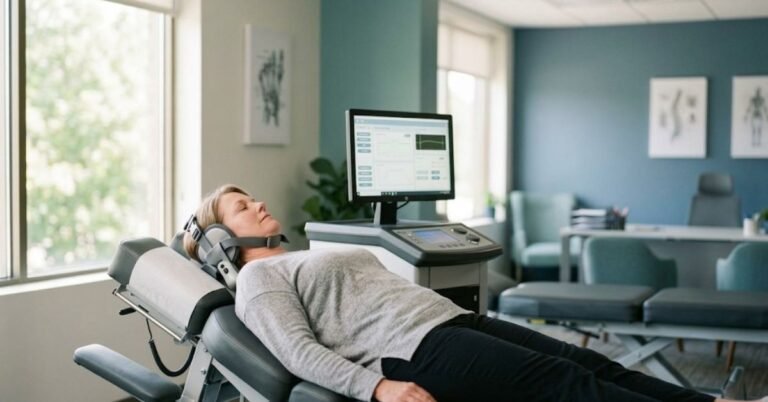


A concussion after a car accident is a brain injury. That point needs to be clear before discussing the neck, chiropractic care, or rehabilitation. If you may have a concussion, the first priority is appropriate medical evaluation, especially when symptoms are severe, worsening, or accompanied by danger signs such as repeated vomiting, increasing confusion, seizure, weakness, slurred speech, unequal pupils, or inability to wake normally.
Once urgent brain and spinal injuries have been evaluated, another part of the crash may still need attention: the cervical spine. The same acceleration-deceleration forces that can produce a concussion can also strain the neck. Headache, dizziness, stiffness, balance complaints, and pain may overlap between concussion and cervical injury, which is one reason post-accident symptoms should not automatically be attributed to only one structure.
At Citrin Chiropractic Center in St. Louis, accident patients receive a musculoskeletal and neurological screening, with digital X-rays available on-site when appropriate and referral for additional imaging or specialist care when needed. Chiropractic treatment is aimed at appropriate neck and musculoskeletal injuries; it is not presented as a treatment that cures the brain injury itself.
First: Know the Concussion Danger Signs
A concussion is a form of mild traumatic brain injury, but “mild” describes the classification of the injury rather than how disruptive the symptoms can feel. Symptoms can involve headaches, dizziness, balance problems, nausea, vision changes, difficulty concentrating, feeling foggy, sleep changes, and mood or emotional changes. Some appear immediately, while others can become noticeable later.
Seek emergency medical care immediately for a worsening headache that does not go away, repeated vomiting, seizure, increasing confusion or agitation, slurred speech, weakness or numbness, decreased coordination, one pupil larger than the other, inability to recognize people or places, or increasing drowsiness/inability to wake normally.
Those symptoms require emergency assessment. A chiropractic office is not the place to rule out bleeding in the brain or another acute neurological emergency.
Why the Neck Matters After a Concussion
Car crashes often expose the head and neck to rapid acceleration and deceleration. That can produce a concussion, a cervical sprain/strain commonly called whiplash, or both. Citrin’s whiplash guide describes how rear-end crashes can force the neck through rapid extension and flexion, stressing muscles, ligaments, discs, and other cervical structures.
The clinical challenge is that some cervical symptoms overlap with concussion symptoms. Headache, dizziness, neck pain, reduced motion, and difficulty tolerating activity may have more than one contributor. Treating a confirmed neck injury does not “treat the brain,” but it can address a separate musculoskeletal injury that may be contributing to the patient’s overall symptom burden.
Concussion and Whiplash Can Occur Together
It is a mistake to assume that a patient has either a concussion or whiplash. The forces in a collision can affect both the brain and the cervical spine. A person can therefore require concussion management from an appropriate medical professional while also receiving treatment for a diagnosed neck injury.
This is especially important when the patient has neck tenderness, stiffness, limited range of motion, pain with movement, or radiating symptoms into the shoulder or arm. Those findings deserve their own evaluation rather than being automatically attributed to concussion.
A common post-accident mistake
Assuming every headache, dizzy spell, or concentration problem comes from the neck — or assuming every neck symptom comes from the concussion. Overlap is common, and the correct treatment depends on identifying which problems are actually present.
What Neck Treatment Can and Cannot Do
| Clinical Goal | Neck-Focused Care | Concussion Care |
|---|---|---|
| Rule out brain bleed or serious head injury | Not the role of chiropractic treatment | Requires appropriate medical/emergency evaluation |
| Manage cervical joint or soft-tissue injury | May be appropriate after screening | Does not replace neck-specific assessment |
| Address neck stiffness and reduced motion | May include manual care, exercise, or soft-tissue treatment | May need to be coordinated with concussion recovery |
| Treat the brain injury itself | No | Managed through concussion-specific medical guidance |
| Return to activity | Neck tolerance may be one factor | Should follow concussion-specific progression |
Why Screening Comes Before Manipulation
Immediately after a significant crash, treatment should not begin with the assumption that routine spinal manipulation is appropriate. The provider first needs to consider the mechanism of injury, neurological findings, fracture risk, severe pain, head-injury symptoms, and whether imaging or referral is needed.
Citrin’s auto accident care process includes a comprehensive evaluation, digital X-rays on-site, range-of-motion testing, and neurological screening. Advanced imaging referrals are available for injuries that may not be visible on standard X-rays.
When treatment is appropriate, technique selection should match the patient’s condition. Acute neck injuries may require gentler approaches, soft-tissue care, rehabilitation, or delayed progression rather than forceful treatment.
Where Chiropractic Care May Fit
For a patient who has already been medically assessed for concussion and does not have a contraindication to musculoskeletal treatment, chiropractic care may focus on the cervical component of the injury. That can include restoring comfortable movement, addressing mechanical neck pain, reducing associated muscle guarding, and gradually rebuilding function.
Citrin offers multiple chiropractic adjustment techniques, along with therapeutic massage, rehabilitation, and other conservative approaches. Treatment is selected according to the patient’s findings rather than automatically applying the same adjustment to every accident case.
Soft-Tissue Treatment and Cervical Muscle Guarding
After a collision, neck muscles may tighten protectively around irritated joints or soft tissues. Persistent muscle guarding can make turning the head, sleeping, driving, and returning to normal activity more difficult.
When appropriate, therapeutic massage or trigger-point work may be used to address soft-tissue tension as part of the neck treatment plan. The goal is not to claim that massage treats concussion, but to treat a separate musculoskeletal component that may be present at the same time.
What About Dizziness and Headaches?
Dizziness and headache can occur with concussion, cervical injury, vestibular problems, migraine, and other conditions. Because the symptoms overlap, they should be assessed rather than self-diagnosed.
If a headache is worsening, severe, or accompanied by neurological danger signs, seek urgent medical care. If serious causes have been ruled out and the patient has persistent neck pain or cervical dysfunction, musculoskeletal treatment may be one part of a broader recovery plan.
Current concussion rehabilitation guidance supports an individualized approach rather than prolonged strict rest. Depending on the patient, recovery may involve gradual return to activity and targeted rehabilitation for specific symptom systems. Cervical rehabilitation may therefore be relevant when neck injury is one of the identified contributors, but it should be coordinated with the patient’s concussion management.
When Additional Imaging or Referral Matters
Standard X-rays can show certain bone and alignment findings but do not diagnose concussion and do not show every soft-tissue or neurological injury. If symptoms or examination findings suggest a problem that requires more advanced evaluation, the correct next step may be MRI, CT, vestibular assessment, neurology, sports medicine, emergency medicine, or another specialist.
Citrin’s auto accident program specifically notes advanced imaging referrals for injuries that are not visible on standard X-rays. The clinic also coordinates with medical specialists when appropriate.
How Soon Should You Be Evaluated After a Crash?
After a collision, symptoms can change over the first hours and days. Citrin recommends prompt evaluation after an accident, particularly when symptoms are present. That does not mean every patient needs chiropractic treatment immediately; it means injuries should be assessed rather than ignored.
The clinic’s guide on when to see a doctor after a car accident emphasizes early evaluation because delayed symptoms are common after crashes. For suspected concussion, however, the level and location of care should be determined by the neurological symptoms and danger signs.
Insurance and Documentation After an Auto Accident
Patients with both concussion symptoms and neck injuries may receive care from more than one provider. Clear documentation helps each provider understand what has been diagnosed, what treatment has been given, and how symptoms are changing over time.
Citrin works with auto insurance claims and personal injury cases and provides treatment documentation for accident patients. Its auto accident insurance guide explains MedPay, PIP, and other payment pathways that may apply depending on the policy and claim.
For patients represented by an attorney, the clinic also offers attorney and personal injury coordination.
A Safer Post-Accident Decision Path
- Concussion danger signs or severe neurological symptoms? Call 911 or go to the emergency department.
- Possible concussion without emergency danger signs? Get appropriate medical assessment and follow concussion-specific guidance.
- Neck pain, stiffness, or reduced motion after the crash? Have the cervical injury evaluated as a separate part of the accident.
- Serious neck injury ruled out and conservative care is appropriate? Treatment may include gentle chiropractic care, soft-tissue work, rehabilitation, and home exercises.
- Symptoms worsen or new neurological signs appear? Return for medical evaluation promptly.
Serving St. Louis Auto Accident Patients
Citrin Chiropractic Center is located at 10035 Page Avenue in St. Louis and provides same-day appointments for many auto accident patients. The clinic offers on-site digital X-rays, neurological screening, insurance coordination, bilingual English and Spanish care, and referrals for additional imaging or specialists when needed.
Frequently Asked Questions
Can a chiropractor treat a concussion?
A concussion is a brain injury and should be medically evaluated and managed appropriately. Chiropractic care may address a separate cervical or musculoskeletal injury that occurred in the same accident, but it should not be presented as a substitute for concussion diagnosis or emergency neurological care.
Why does neck treatment matter after a concussion?
Car crashes can injure the brain and cervical spine at the same time. Neck injury can contribute its own pain, stiffness, headache, and movement problems. When those cervical findings are present and serious injury has been ruled out, treating the neck may address an important musculoskeletal part of recovery.
Can whiplash and concussion happen together?
Yes. The acceleration-deceleration forces in a crash can affect both the brain and the neck. Symptoms may overlap, so a patient may need concussion-specific medical management plus separate evaluation and treatment of a cervical injury.
What concussion symptoms require emergency care?
Danger signs include a worsening headache that does not go away, repeated vomiting, seizures, increasing confusion or agitation, slurred speech, weakness or numbness, decreased coordination, one pupil larger than the other, inability to recognize people or places, or increasing drowsiness/inability to wake normally.
Should I get a neck adjustment immediately after a car accident?
Not automatically. A provider should first assess the mechanism of injury, neurological status, fracture risk, and other red flags. Treatment technique and timing should be based on the examination and any necessary imaging or medical clearance.
Do X-rays diagnose concussion?
No. Standard X-rays are used to evaluate certain bone and alignment issues and do not diagnose concussion. Concussion is diagnosed clinically, and additional imaging may be ordered when clinicians are concerned about more serious injury.
Does Citrin offer same-day accident appointments?
Yes. Citrin currently advertises same-day appointments for auto accident patients and offers on-site digital X-rays, neurological screening, transportation for eligible accident patients, insurance coordination, and referrals when needed.