

If you live with chronic back pain, sciatica, or a herniated disc, you have probably heard about spinal decompression. It is one of the most effective non-surgical options for spinal disc problems, and at Citrin Chiropractic Center we have used it to help thousands of St. Louis patients avoid the operating room. Here is exactly how it works, what conditions it treats, and what to expect during a typical course of care.
What Is Spinal Decompression Therapy?
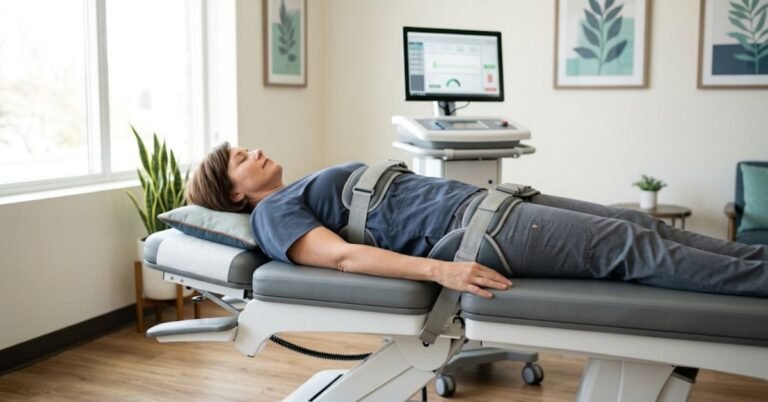
Spinal decompression is a gentle, computer-controlled traction therapy that lengthens the spine to relieve pressure on injured discs and pinched nerves. Unlike surgical decompression, the non-surgical version uses a motorized table to apply precise force to specific spinal segments. The result is a measured, safe stretching effect that creates negative pressure inside the spinal disc.
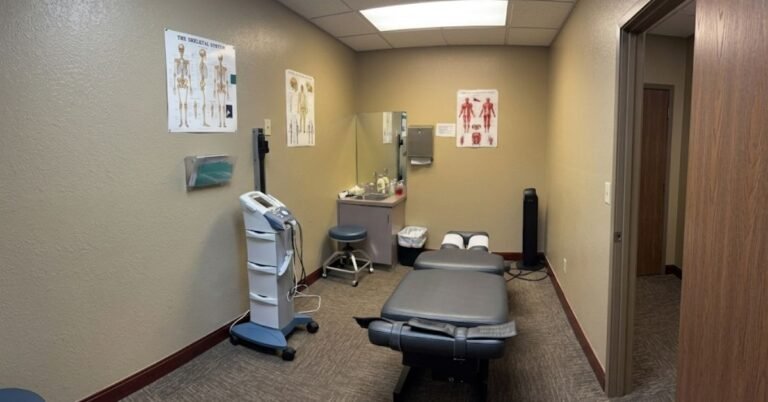
At Citrin we use a dedicated decompression table — one of the few in the St. Louis area equipped specifically for this work. The therapy is FDA-cleared and supported by years of clinical research showing meaningful improvement for disc-related back and leg pain.
How Decompression Actually Works on a Disc
When a spinal disc bulges or herniates, the inner gel-like material pushes outward and presses on a nerve root. This is what causes the radiating pain, numbness, and weakness many patients feel down the leg or arm. Spinal decompression addresses this in two ways:
- Negative pressure pulls the disc material inward. The same physics that draws fluid into a syringe draws the herniated material back toward the disc center, taking pressure off the nerve.
- Nutrients flow into the disc. Spinal discs have no direct blood supply — they rely on movement to receive oxygen and nutrients. Decompression literally pumps healing nutrients into damaged tissue.
This is fundamentally different from a chiropractic adjustment. Where a chiropractic adjustment restores joint motion, decompression specifically targets disc-level issues that adjustments alone cannot resolve.
Conditions Spinal Decompression Treats
Decompression is most effective for conditions where disc compression is the primary cause of pain:
- Lower back pain from herniated, bulging, or degenerative discs
- Sciatica — radiating pain from the lower back down one leg
- Cervical (neck) disc herniations
- Facet syndrome and posterior joint pain
- Failed back surgery syndrome
- Chronic neck or back pain that has not improved with rest, medications, or physical therapy alone
It is especially useful for auto accident patients with disc injuries that show up days after the crash, and for patients who want to avoid surgery and prescription painkillers.
What to Expect During a Treatment Session
Each session lasts 30 to 45 minutes. You lie comfortably on the decompression table — fully clothed — while a harness gently distributes force across your hips and chest. The table cycles through phases of pull and release, which feels like a slow, controlled stretch through the spine. Most patients describe it as relaxing; some fall asleep during sessions.
A typical treatment plan involves 15 to 20 sessions spread over 4 to 6 weeks. Many patients notice meaningful improvement within the first 4 to 6 sessions — reduced radiating pain, less stiffness, and better range of motion. We pair decompression with targeted rehabilitation exercises and chiropractic care so the spine stays strong after the disc heals.
Spinal Decompression vs. Surgery — Why It Matters
Spinal surgery is invasive, expensive, and carries real risks: infection, nerve damage, and long recovery times. Many studies show that for the majority of disc patients, conservative care (including decompression) achieves similar or better long-term outcomes — without the surgical risk. That is why surgeons themselves often recommend trying decompression and chiropractic care first.
Is Spinal Decompression Right for You?
Decompression is not for every patient. We will evaluate your medical history, current imaging (MRI or X-ray), and pain pattern before recommending it. Patients with severe osteoporosis, certain spinal fractures, advanced cancer, or pregnancy should generally not undergo decompression. For everyone else with disc-related pain, it is one of the safest, most evidence-supported options available.
If your pain came from a car accident, your auto insurance, including MedPay or PIP, often covers decompression. Most major health insurers also cover it for documented disc conditions.
Ready for relief? Call Citrin Chiropractic Center at (314) 890-2400 or request your appointment online. We offer same-day appointments, accept all major auto insurance, and provide free transportation if needed. Two doctors with 35+ years of experience, bilingual care (English/Spanish), serving St. Louis since 1977.