
The moment a parent hears the word scoliosis from a school nurse or pediatrician, or the moment an adult sees it written on their own X-ray report, a specific question tends to follow: is my child going to need surgery? Am I? The short answer, in the great majority of cases, is no. Most people diagnosed with scoliosis never require surgical intervention, and the decades of life ahead of them are lived, and lived well, through conservative management.
What tends to get lost in the initial worry is the actual range of what scoliosis means clinically. It is not one condition but a spectrum, from mild curvatures that produce no symptoms and require only monitoring, to severe cases where surgical correction is the right call. The vast middle of that spectrum is where chiropractic care does its best work: managing pain, preserving function, slowing curve progression when possible, and helping patients live active lives without their spine dictating what they can do.
At Citrin Chiropractic Center in St. Louis, our physicians have managed scoliosis in both adolescent and adult patients for over 45 years. What follows is a plain explanation of what scoliosis actually is, what chiropractic care can and cannot do for it, how our office approaches management, and when surgical evaluation genuinely becomes necessary.
What Scoliosis Actually Is
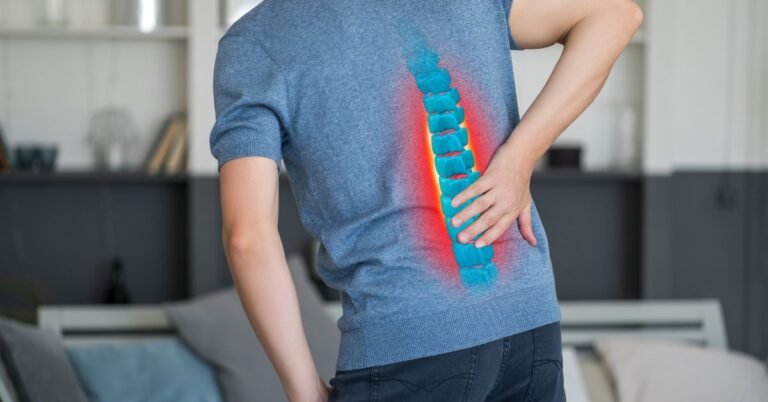
Scoliosis is a sideways curvature of the spine, measuring more than 10 degrees on standing X-ray. A normal spine, viewed from behind, runs in a straight vertical line. A scoliotic spine curves to one side, often with a compensating curve elsewhere, producing an S-shape or C-shape rather than a straight line. Along with the sideways curve, the vertebrae in the affected segment usually rotate, which produces the visible rib hump or shoulder-blade prominence that draws attention during a screening exam.
The condition is far more common than most people realize. Roughly 2 to 3 percent of adolescents have some degree of scoliosis, and the rate rises among adults as the spine degenerates with age. Most cases are mild and never require intervention. Some cases progress and require treatment. A small number require surgery.
Scoliosis is classified by severity based on the Cobb angle, the measurement of the curve on X-ray.
Mild Scoliosis
The most common range. Typically produces no symptoms, no cosmetic concern, and requires only monitoring in adolescents to make sure the curve does not progress. In adults, this level of curvature may or may not produce back pain depending on how the surrounding muscles and joints are handling it. Chiropractic care in this range focuses on maintaining spinal function and preventing secondary problems.
Moderate Scoliosis
In adolescents, this range typically warrants bracing to prevent progression during growth. In adults, this range frequently produces back pain, postural asymmetry, and mechanical problems that respond well to conservative management. Chiropractic care here is genuinely valuable for pain management, functional improvement, and slowing further progression where possible.
Severe Scoliosis
The threshold where surgical evaluation is generally recommended in growing adolescents. In adults, whether surgery is warranted depends heavily on pain, function, and rate of progression, many adults with curves in this range live full lives with conservative care alone.
Very Severe Scoliosis
Surgical correction is typically recommended, especially in adolescents whose curves are still progressing. Even in this range, conservative care remains important, both before and after surgery, for pain management and long-term function.
The important nuance: the great majority of scoliosis cases fall in the mild-to-moderate range, and the great majority never need surgery. Conservative management, with chiropractic care as a central part of it, is the right answer for most patients most of the time.
Can a Chiropractor Actually Help With Scoliosis?
This is the honest question, and it deserves an honest answer. Chiropractic care cannot straighten a scoliotic spine back to a fully normal alignment. No conservative treatment can. What chiropractic care can do, and this is where the value lies, is manage the symptoms that scoliosis produces, preserve function around the curve, address the secondary problems that develop when the spine is loaded asymmetrically, and, in growing adolescents, potentially slow progression when combined with appropriate exercise and monitoring.
The reason this matters is that most of what patients suffer with scoliosis is not the curve itself, it is the downstream consequences. When the spine loads asymmetrically, certain muscles chronically overwork while others weaken. Joints on one side of the spine take more stress than the other. Discs load unevenly, degenerating faster in some segments than others. Ribs and shoulders sit at different heights. Hips tilt. Over years, this cumulative asymmetry produces the back pain, muscle fatigue, and reduced function that most scoliosis patients actually experience.
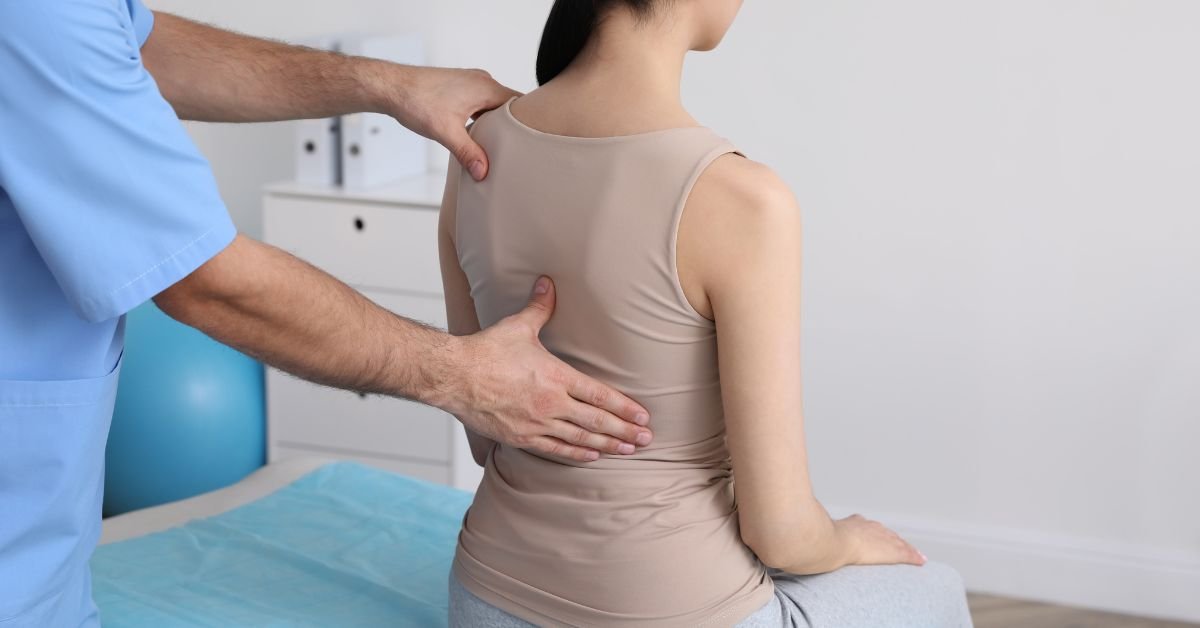
Chiropractic care addresses these downstream problems directly. Adjustments restore motion to segments that have become restricted. Soft tissue work releases the chronically tight muscles that develop on the concave side of the curve. Rehabilitation strengthens the muscles that have weakened on the convex side. Postural training helps patients hold themselves in ways that reduce cumulative stress. None of this “cures” scoliosis, but taken together it produces meaningful improvements in pain, function, and quality of life for the vast majority of patients.
Adolescent vs Adult Scoliosis: Different Conditions, Different Approaches
The word scoliosis covers two clinically different situations. Understanding which one you or your child has changes what appropriate treatment looks like.
| Feature | Adolescent Scoliosis | Adult Scoliosis |
|---|---|---|
| Typical Cause | Idiopathic (cause unknown), appears during growth spurts | Adolescent scoliosis that persisted, or new degenerative scoliosis from disc and joint wear |
| Main Concern | Curve progression during growth years | Pain, function, and slow further progression |
| Symptoms | Often none; discovered on screening | Back pain, muscle fatigue, postural asymmetry, sometimes radiating pain |
| Primary Treatment Goal | Prevent progression until skeletal maturity | Manage pain, maintain function, slow further deterioration |
| Role of Chiropractic | Adjunct to monitoring and bracing; postural and functional support | Central role, pain management, spinal function, rehabilitation |
For adolescents, the priority is monitoring curve progression through skeletal maturity. Chiropractic care in this population plays a supporting role alongside pediatric orthopedic monitoring, helping with posture, function, and pain if any is present. Curves that are progressing rapidly often warrant bracing, and severe progressing curves warrant surgical evaluation. Our office coordinates directly with pediatric orthopedists in these cases.
For adults, chiropractic care often plays a more central role. Adult scoliosis produces symptoms that respond well to conservative management, and most adult patients do not need surgery. The primary goals are managing pain, maintaining spinal function, preventing secondary problems like disc degeneration and joint dysfunction, and helping patients stay active as they age.
Pain Management Without Surgery
The single biggest reason adult scoliosis patients come to our office is back pain. The pain is real, it is often persistent, and it can be significantly improved with the right approach. Our back pain treatment approach for scoliosis patients combines several elements.
Chiropractic Adjustment
Adjustment restores motion to spinal segments that have become restricted due to the curve. In scoliosis, particular segments are chronically overloaded and inflamed, and restoring their proper motion frequently produces immediate pain relief. Adjustments in scoliosis patients are tailored to the specific curve pattern, not delivered as a generic protocol.
Soft Tissue Work and Massage Therapy
The muscles around a scoliotic spine develop predictable patterns of tightness and weakness. Targeted medical massage therapy addresses the chronically tight side, while active rehabilitation strengthens the weakened side. Together they rebalance the load through the spine and take pressure off the joints that hurt most.
Non-Surgical Spinal Decompression
For scoliosis patients whose curve is producing disc-related pain or nerve irritation, non-surgical spinal decompression can be genuinely helpful. Decompression reduces pressure on affected discs and can improve conditions like sciatica that develop as a secondary consequence of scoliosis-related disc degeneration. Related conditions like disc injury are addressed with the same tool.
Postural Training
Patients with scoliosis benefit substantially from learning how to hold themselves in ways that reduce cumulative stress on the spine. Simple changes, how you sit at a desk, how you sleep, how you carry weight, produce meaningful reductions in day-to-day pain over time.
The Chiropractic + Exercise Protocol
In-office care is only half of the picture. The other half is a targeted home exercise program that strengthens the specific muscles a scoliotic spine needs to function well. Without this, pain relief from adjustments and soft tissue work is temporary. With it, patients often achieve durable improvement.
The exercise protocol for scoliosis patients typically includes core stabilization work, specific strengthening of the muscles on the convex side of the curve, mobility work for the joints that have become stiff, and postural drills that translate the improvements from the clinic into daily life. The specifics vary by curve pattern and by patient, which is why the exercises are prescribed based on your specific examination, not from a generic handout.
The exercise mistake most scoliosis patients make
Doing generic core exercises without accounting for the direction of the curve can actually make asymmetries worse. Scoliosis-specific exercise, like the Schroth method and similar approaches, is directional, targeting specific muscles based on where the curve is and which way it bends. If the last program you tried felt like it made things worse, this is often why.
When Surgery Genuinely Is the Right Answer
Some patients do need surgical evaluation, and it is important to be honest about which cases those are. Adolescents with curves progressing past 45 to 50 degrees, especially those still growing, typically warrant orthopedic surgical consultation. Adults whose curves are producing severe pain that has not responded to a thorough course of conservative care, or whose curves are progressing rapidly, may benefit from surgical evaluation. Patients with neurological compromise, weakness, bowel or bladder changes, or severe radiating pain need urgent evaluation.
Our office does not perform surgery, and we do not have a stake in whether you have one. If your presentation calls for surgical consultation, we say so plainly and coordinate the referral. What we do object to is the pattern of patients being told surgery is inevitable when a full trial of conservative care has not been given. That trial deserves to happen before major decisions are made.
Living With Scoliosis: Long-Term Management
Scoliosis is a lifelong condition for the patients who have it. Long-term management, rather than one-time treatment, is the right frame. Most of our long-standing scoliosis patients follow a similar pattern: an initial course of care that addresses acute pain and establishes function, a period of active work with home exercises and periodic visits, and then long-term maintenance care at whatever interval keeps them feeling well. For some patients that is once a month, for others once a quarter.
The goal is not perfection of the curve, that is not achievable with any treatment. The goal is a patient who lives a full, active life, does the work they want to do, plays with their children or grandchildren, sleeps well, exercises without fear, and does not have their spine dictating their days. That goal is achievable for the great majority of scoliosis patients, and it is what our office works toward.
Serving St. Louis and Surrounding Suburbs
Our office at 10035 Page Avenue serves scoliosis patients from across the St. Louis metro, including from Florissant, Clayton, Maryland Heights, University City, Ferguson, and beyond. Bilingual English and Spanish care is available at every visit. Same-day appointments are available for patients dealing with an acute flare.
Frequently Asked Questions
Can a chiropractor cure scoliosis?
No treatment, chiropractic, physical therapy, bracing, or even surgery, “cures” scoliosis in the sense of returning the spine to a perfectly normal alignment. What chiropractic care can do is manage the pain scoliosis produces, preserve and improve function around the curve, address secondary problems like disc degeneration and joint dysfunction, and, in growing adolescents, potentially slow progression when combined with appropriate monitoring and exercise. For the great majority of patients, this level of management is enough to live well without surgery.
Is chiropractic adjustment safe for someone with scoliosis?
Yes, when performed by an experienced physician who has thoroughly evaluated the specific curve pattern. Adjustments in scoliosis patients are tailored to the individual case rather than delivered as a generic protocol. Our physicians take the specific curve, its severity, and the surrounding soft tissue into account when planning treatment.
How often should I see a chiropractor if I have scoliosis?
Frequency depends on your specific case and where you are in the management arc. Patients dealing with acute pain typically start with more frequent visits, twice a week for a few weeks, then taper as symptoms improve. Long-term maintenance visits are commonly once a month to once a quarter. Your physician will outline what makes sense based on your examination.
Will my child need surgery for their scoliosis?
Most likely not. Curves under 40 degrees rarely require surgery. Curves between 25 and 40 degrees are typically managed with bracing and monitoring during growth. Surgery is generally considered for curves progressing past 45 to 50 degrees in growing adolescents. Even in the higher ranges, conservative management often works. Get a thorough evaluation before surgery is presented as inevitable.
What is the best exercise for scoliosis?
Scoliosis-specific exercise, exercise that targets particular muscles based on the direction of the curve, is more effective than generic core work. Approaches like the Schroth method are designed specifically for scoliotic spines. The specifics vary by curve pattern, which is why exercise should be prescribed based on your examination rather than from a generic list.
Can scoliosis get worse in adulthood?
Yes, it can. Adult scoliosis can progress slowly as the discs and joints of the spine degenerate, particularly if the spine is loaded asymmetrically over decades. Regular maintenance care and appropriate exercise slow this progression in most patients. The alternative, doing nothing, allows the asymmetry to compound over time.
Does insurance cover chiropractic care for scoliosis?
Most major insurance plans cover chiropractic care for scoliosis and related back pain. Our office accepts most major insurance and can verify your specific benefits before your first visit. Call (314) 890-2400 to have the team check your coverage.
My child was just diagnosed with scoliosis. Should I be worried?
In most cases the honest answer is: watchful attention, not panic. The great majority of adolescent scoliosis cases are mild and never require surgery. What matters is appropriate monitoring, ideally in coordination with a pediatric orthopedist, along with supportive care to maintain function and address any pain. Our office can be part of that team.