

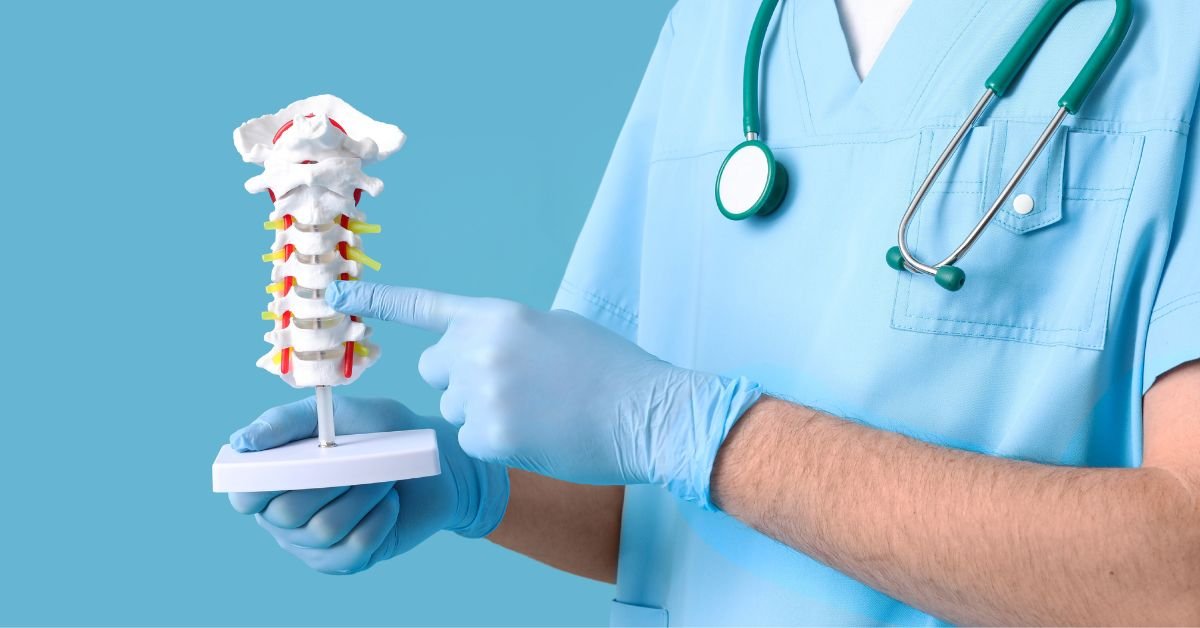
The moment a surgeon mentions the word “back surgery,” most patients experience a specific kind of dread. It is not just fear of the operation itself, it is the awareness that back surgery is a one-way door, once you go through it, you cannot go back to what you had before. The hardware is placed, the disc is removed, the spinal segment is fused. Whatever the outcome, that decision is permanent.
Non-surgical spinal decompression sits on the other side of that door. It is reversible, non-invasive, and, for the right candidate, produces results that can eliminate the need for surgery entirely. For patients weighing whether to schedule that surgical consultation or to try conservative care first, the comparison between the two options matters, and it deserves to be laid out honestly rather than as a sales pitch for one side or the other.
At Citrin Chiropractic Center in St. Louis, we have treated patients across the full spectrum — those who came in trying to avoid surgery and succeeded, those who tried conservative care first and eventually still needed surgery, and those for whom surgery genuinely was the right first answer. What follows is a straight comparison of the two paths across cost, risk, recovery, and success rates, along with an honest framework for deciding which is right for you.
The Two Paths at a Glance
Non-Surgical Spinal Decompression
- Non-invasive, reversible
- No anesthesia, no incision
- No hospitalization
- No hardware or permanent changes
- Return to work same day
- Treatment over several weeks
Back Surgery
- Invasive, permanent
- General anesthesia required
- Hospital stay of 1–4 days typical
- Hardware placement common
- Weeks to months off work
- One-time procedure, extended recovery
The overview above frames the choice, but the honest comparison lives in the details. Let us walk through each dimension.
Cost Comparison
Cost is the most concrete comparison because the numbers are documented in insurance data and hospital pricing disclosures. The gap between the two paths is dramatic.
| Treatment | Typical US Cost (Before Insurance) |
|---|---|
| Non-Surgical Spinal Decompression (full protocol) | $2,500 – $6,000 |
| Microdiscectomy | $15,000 – $30,000 |
| Laminectomy | $50,000 – $90,000 |
| Artificial Disc Replacement | $35,000 – $60,000 |
| Spinal Fusion (single-level) | $80,000 – $150,000+ |
| Spinal Fusion (multi-level) | $150,000 – $300,000+ |
Even with insurance covering the majority of surgical costs, patient out-of-pocket exposure for back surgery routinely runs into thousands of dollars in deductibles, coinsurance, and out-of-network charges. Non-surgical decompression, at a fraction of the total cost, often comes in below what a patient would pay just as their portion of a surgical procedure.
Beyond the direct treatment costs, surgical patients face secondary costs, lost wages during recovery (weeks to months), physical therapy following surgery, prescription medications during recovery, and, in a significant minority of cases, revision surgery when the first operation fails. For patients whose disc pain traces to a car accident, our insurance coverage guide walks through how MedPay applies to non-surgical care — often eliminating the out-of-pocket cost entirely.
The cost reality: a full non-surgical spinal decompression protocol typically costs less than a single insurance deductible for major back surgery. If decompression resolves the problem, the surgical costs are avoided entirely. If it does not, surgery remains an option and the decompression cost is a small fraction of what surgery would have cost.
Risk Comparison
Every medical intervention carries risk. The relevant question is what risks each option actually puts you through, and how those risks compare against the potential benefit.
Risks of Spinal Decompression
Spinal decompression is a low-risk intervention when performed by trained providers on properly screened patients. The most common issues are temporary muscle soreness in the first few sessions and, occasionally, a brief increase in symptoms before improvement begins. Serious adverse events are rare and generally trace back to patients who should not have been candidates in the first place — significant osteoporosis, spinal fusion hardware, or other contraindications that a proper screening would have identified.
Because the treatment is non-invasive and does not alter your anatomy, if it does not work, you have not lost anything except time and money. You can still pursue surgery or any other treatment path afterward.
Risks of Back Surgery
Back surgery carries a substantially longer risk profile, including anesthesia complications (which affect a small percentage of surgical patients but can be serious), surgical site infection (2 to 5 percent risk for most spinal procedures), dural tears leading to cerebrospinal fluid leaks, nerve damage during the operation (rare but permanent when it happens), failed back surgery syndrome (persistent or worsened pain following surgery, affecting a meaningful percentage of patients across studies), hardware complications requiring revision surgery, adjacent segment disease (the segments above and below a fused level often degenerate faster, sometimes requiring additional surgery years later), and the reality that some surgical outcomes cannot be reversed if the result is worse than the starting point.
This is not a case against surgery. Surgery has legitimate indications and produces excellent outcomes for the right patients. It is a case for taking surgical risk seriously, and for exhausting reasonable non-surgical options before accepting that risk when appropriate options exist.
Failed back surgery syndrome
Studies consistently show that a meaningful percentage of back surgery patients continue to experience pain after surgery, sometimes worse than before. This condition, known as failed back surgery syndrome, is one of the most difficult problems in spine medicine to reverse. It is also one of the strongest arguments for trying non-surgical options first when they are genuinely applicable to the underlying condition.
Recovery Time Comparison
| Recovery Metric | Non-Surgical Decompression | Back Surgery (Average) |
|---|---|---|
| Return to work | Same day | 2–12 weeks depending on procedure and job |
| Driving restrictions | None | 2–6 weeks post-op |
| Lifting restrictions | Minimal, activity-based | 6–12 weeks or longer |
| Full return to activity | During or immediately after protocol | 3–12 months |
| Physical therapy required after | Sometimes, as maintenance | Almost always, for months |
| Time until bone fusion (fusion procedures) | N/A | 3–12 months |
The recovery difference has real-world consequences. A patient who chooses non-surgical decompression can typically continue working, driving, and functioning normally throughout the treatment course. A patient who chooses back surgery is typically out of work for weeks, restricted from many normal activities for months, and building back to full function over the following year.
For patients whose life circumstances do not accommodate an extended recovery, this practical difference often becomes the deciding factor.
Success Rate Comparison by Condition
The most useful comparison is condition-specific. Neither treatment is universally superior, both have conditions where they shine and conditions where they underperform.
Contained Disc Herniation
For contained lumbar or cervical disc herniations without free fragments, non-surgical decompression is often the right first choice. Success rates in appropriately selected patients are strong, and the reversibility of the intervention means that if decompression does not produce results, surgery remains an available option. Surgery for the same condition produces good outcomes but with the higher risk profile and longer recovery.
Bulging Disc and Disc Bulge with Sciatica
Bulging discs and disc-related sciatica respond well to non-surgical decompression in the majority of appropriate candidates. Surgery for these conditions is rarely necessary as a first-line intervention.
Degenerative Disc Disease
Non-surgical decompression can manage symptoms and improve function but cannot reverse degeneration. Surgery (fusion or disc replacement) offers structural correction but with the surgical risk profile. Most patients with degenerative disc disease benefit from starting non-surgical.
Spinal Stenosis
Mild to moderate stenosis often responds to conservative care including decompression. Severe stenosis with progressive neurological compromise may require surgical decompression (laminectomy). This is one of the conditions where the surgical decision is more finely balanced.
Cauda Equina Syndrome
This is a surgical emergency. Loss of bowel or bladder control, severe leg weakness, or saddle anesthesia following disc injury requires immediate surgical intervention. Non-surgical treatment is not appropriate in these cases.
Severe Ruptured Disc with Free Fragments
When disc material has fragmented and migrated into the spinal canal, surgical removal is often the appropriate treatment. Non-surgical decompression cannot address fragmented disc material.
Failed Prior Back Surgery
Patients who have had prior back surgery and are considering another operation should always exhaust non-surgical options first. Revision back surgery carries a substantially higher risk of poor outcomes than the original operation.
When Surgery Genuinely IS the Right Answer
This article is not anti-surgery. Surgery has clear indications and produces excellent outcomes when applied to the right patients. Being honest about when surgery is genuinely necessary is part of taking your care seriously.
Surgery is the appropriate first-line treatment when: you have signs of cauda equina syndrome (surgical emergency), you have progressive neurological deficits (worsening weakness, loss of function), imaging shows a severely ruptured disc with free fragments requiring removal, a spinal fracture or severe instability is present, malignancy or infection of the spine is causing the pain, or you have completed a genuine course of appropriate conservative care and it did not produce adequate results.
The last point is important. A surgical recommendation is more reasonable when non-surgical options have actually been tried, not just discussed. Some surgical candidates have never received a proper trial of conservative care, and their surgeon and their conservative-care provider both deserve to know that.
When Decompression Should Be Tried First
For most patients with disc-related back or neck pain that has not responded to basic conservative care (ibuprofen, rest, stretching, general chiropractic), non-surgical decompression deserves a proper trial before surgery is scheduled. The specific patient profile where decompression is the right first step includes: contained disc herniation without progressive neurological symptoms, bulging disc as the primary pain generator, disc-related sciatica without progressive weakness, degenerative disc disease with functional impact, mild to moderate spinal stenosis, and patients who are surgical candidates but want to attempt reversible options first.
Our office coordinates directly with surgical spine specialists in St. Louis when appropriate. If the examination reveals a case where surgery is genuinely the right first step, we say so plainly and facilitate the referral. When the case is a good candidate for non-surgical care, we outline the full protocol and expected outcomes before starting.
The Decision Framework
Here is the honest decision framework we use with patients weighing this choice.
Step 1: Rule out surgical emergencies
Cauda equina syndrome, progressive weakness, loss of bowel or bladder function, severe unrelenting pain unresponsive to any intervention. If any of these are present, surgical evaluation is not optional.
Step 2: Confirm the diagnosis with proper imaging and examination
Both surgery and decompression depend on knowing exactly what is wrong. Ambiguous diagnoses produce disappointing outcomes in both directions.
Step 3: Consider reversibility
All else being equal, a reversible intervention that fails leaves options open. An irreversible intervention that fails does not. For conditions where decompression has a reasonable chance of success, trying it first preserves optionality.
Step 4: Weight the risk-benefit realistically
Consider your specific condition, your specific tolerance for surgical risk, your recovery capacity, your work and family obligations, and the honest success rates of each option for your specific case.
Step 5: Get a second opinion if you feel rushed
A surgeon who is uncomfortable with you getting a second opinion is one you should not trust with your spine. Good surgeons welcome second opinions because their recommendation stands up to scrutiny.
How Non-Surgical Decompression Integrates with Broader Care
Non-surgical spinal decompression works best as part of an integrated care plan rather than a standalone treatment. At our office, decompression is typically paired with chiropractic adjustment to restore proper motion to affected spinal segments, massage therapy to address the muscle guarding that develops around injured discs, active rehabilitation to strengthen the supporting musculature, and postural training to prevent recurrence. This integrated approach is what makes conservative care genuinely competitive with surgery for the appropriate patient population.
For patients whose disc problem stems from an auto accident, our auto accident treatment approach integrates decompression with the full accident recovery plan. For patients dealing with chronic back or neck pain from other causes, our back pain treatment and neck pain care integrate decompression where the diagnosis supports it.
Serving St. Louis and Surrounding Suburbs
Our office serves patients weighing the surgery-versus-conservative-care decision from across the St. Louis metro, including from Florissant, Clayton, Maryland Heights, University City, Ferguson, and beyond. Bilingual English and Spanish care is available at every visit.
Frequently Asked Questions
Is spinal decompression better than back surgery?
Neither is universally “better.” For contained disc herniations, bulging discs, disc-related sciatica, and mild-to-moderate degenerative disc disease, non-surgical decompression is often the appropriate first choice because it is reversible, lower risk, dramatically less expensive, and produces good outcomes in appropriate candidates. For surgical emergencies, severe ruptured discs, progressive neurological deficits, and cases where conservative care has genuinely failed, surgery is the appropriate answer. The question is which is right for your specific case.
Can spinal decompression prevent me from needing back surgery?
In many cases, yes. Patients who complete a full non-surgical decompression protocol and see meaningful improvement often avoid surgery entirely for the underlying condition. This is one of the primary reasons patients pursue decompression, to have a reasonable shot at avoiding surgery while preserving the option to have surgery later if needed.
What is the success rate of back surgery compared to spinal decompression?
Success rates vary substantially by procedure and condition. Microdiscectomy for a well-selected patient typically produces good initial results in the majority of cases, but with a meaningful rate of recurrence and need for revision surgery. Spinal fusion produces variable results with high rates of adjacent segment disease over time. Non-surgical decompression produces good-to-strong results in appropriate candidates without the surgical risk profile. The honest answer is that both options produce good outcomes in appropriately selected patients and poor outcomes in inappropriately selected patients — selection matters more than the specific intervention.
How do I know if I need surgery or if I should try decompression first?
The presence of any surgical emergency (cauda equina symptoms, progressive weakness, loss of bowel or bladder function) means surgical evaluation is not optional. Absent those, most disc-related back and neck pain deserves a genuine trial of conservative care including decompression before surgery is scheduled. A proper examination determines which category your specific case falls into.
What happens if spinal decompression does not work for me?
You still have every option available that you had before you tried it. Non-surgical decompression does not alter your anatomy or preclude any other treatment. If a full protocol does not produce adequate results, surgery, additional conservative care, injection therapy, and other interventions all remain on the table. The reversibility of decompression is one of its main advantages.
Is back surgery ever the right first choice?
Yes, for surgical emergencies (cauda equina syndrome, progressive neurological deficits), severe structural problems (spinal fracture, severe instability, malignancy), and severely ruptured discs with fragmented material in the spinal canal. Also for patients who have had a genuine trial of appropriate conservative care that did not resolve the problem, where the case now warrants surgical intervention.
What if my surgeon says I need surgery immediately?
Unless you have signs of a true surgical emergency, immediate surgery is rarely the only option. Getting a second opinion is standard practice, and a surgeon who is uncomfortable with you getting one is one to be cautious about. For non-emergency cases, taking time to consider your options is appropriate.
Does insurance cover spinal decompression vs surgery differently?
Yes, and this often surprises patients. Back surgery is broadly covered by health insurance (though patient out-of-pocket exposure can still be substantial). Non-surgical spinal decompression coverage is inconsistent, with some plans covering it and some excluding it. However, the total cost difference is so large that even paying entirely out of pocket for decompression is typically less than the deductible portion of back surgery. For auto accident patients, MedPay coverage typically covers decompression fully.