
Medical massage and deep tissue massage are often treated as if they mean the same thing. They do not. A deep tissue technique can be used during a medical massage, but “medical massage” describes the clinical purpose and treatment context, while “deep tissue” describes a style of hands-on technique.
That distinction matters when you are choosing care for an injury, persistent muscle tension, postural strain, or recovery after a car accident. The best choice is not automatically the massage with the most pressure. It is the approach that matches the problem being treated.
At Citrin Chiropractic Center in St. Louis, massage therapy is used as a clinical service and may include deep tissue work, myofascial release, trigger-point therapy, Swedish massage, stretching, and other techniques depending on the patient’s needs.
The Short Answer: Medical Massage Is the Purpose, Deep Tissue Is a Technique
The simplest way to understand the difference is this: medical massage is defined by why the treatment is being performed, while deep tissue massage is defined by how the therapist works on the tissue.
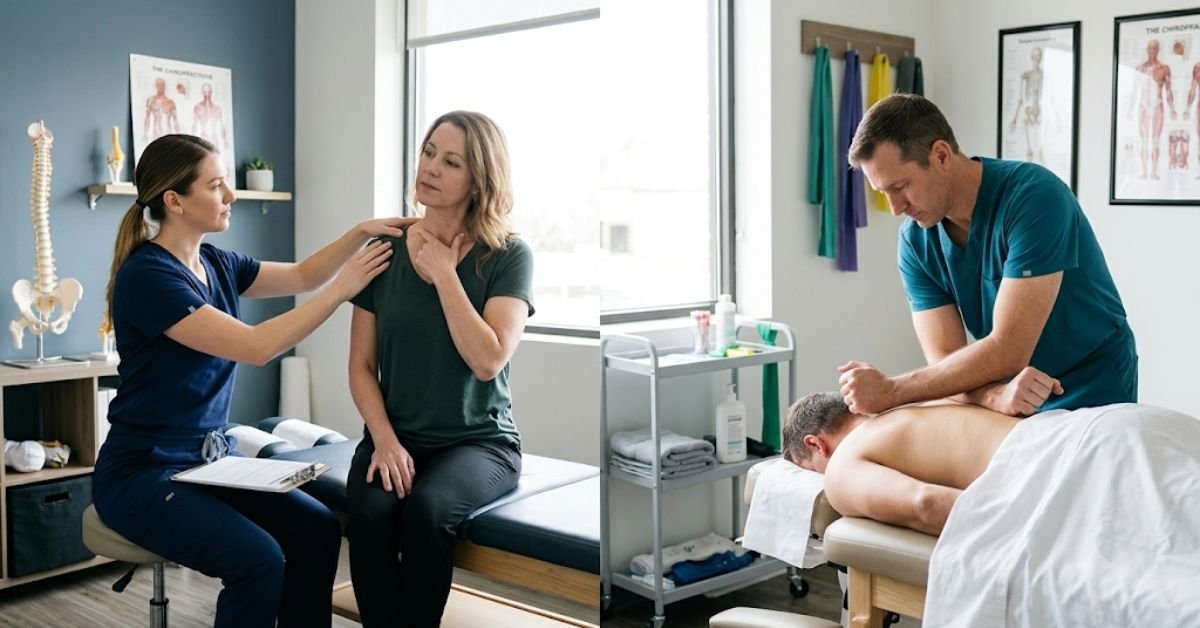
A medical massage session is goal-directed. It is used as part of care for a documented musculoskeletal problem or injury and is typically focused on specific areas rather than providing the same full-body routine to every patient.
Deep tissue massage, on the other hand, uses slower strokes and firmer pressure to work through deeper layers of muscle and connective tissue. It may be part of a medical treatment plan, sports recovery session, or another therapeutic massage session.
The key distinction: You can receive deep tissue massage as part of medical massage, but not every medical massage session requires deep pressure.
What Is Medical Massage?
Medical massage is a clinical, problem-focused form of massage therapy. Rather than beginning with the question “What pressure do you prefer?” the treatment begins with a different question: “What condition or functional problem are we trying to address?”
The therapist may work from a diagnosis, examination findings, injury history, or broader treatment plan. The session may focus on the neck and upper back, a shoulder, the low back and hip, or another specific area depending on the patient’s symptoms.
A medical massage session may include several techniques during the same visit. Deep tissue work may be appropriate in one area, while myofascial or trigger-point techniques may be more suitable elsewhere.
If you want to understand how this differs from relaxation-oriented care, Citrin’s existing medical massage vs spa massage guide covers that separate question in detail.
What Is Deep Tissue Massage?
Deep tissue massage is a hands-on technique that uses slower, more deliberate pressure to reach deeper muscle layers and areas of chronic tension. The therapist may focus on tight bands of muscle, restricted soft tissue, or areas that feel persistently tense despite stretching or general massage.
Deep tissue work is often associated with athletes, physically demanding jobs, repetitive movement, and chronic muscle tightness. Citrin also uses deep tissue techniques as part of broader therapeutic care when a patient’s examination and tolerance make that approach appropriate.
The clinic’s deep tissue massage for athletes guide explains how this technique may be used in sports and recovery-focused care.
Medical Massage vs Deep Tissue Massage: Side-by-Side
| Feature | Medical Massage | Deep Tissue Massage |
|---|---|---|
| What the term describes | The clinical purpose and treatment context | The massage technique and pressure style |
| Main goal | Address a specific musculoskeletal problem or injury | Work on deeper muscle tension and soft-tissue restriction |
| Pressure | Varies according to the condition and patient | Usually firmer and more focused |
| Treatment area | Usually targeted to clinically relevant areas | Targeted to deeper or chronically tense tissue |
| Can include other techniques? | Yes — deep tissue, trigger point, myofascial work, stretching and more | Yes, it can be combined with other techniques |
| Part of a broader care plan? | Often | Sometimes, depending on why it is being used |
Does Medical Massage Always Hurt More?
No. Medical massage does not mean “harder massage.” The amount of pressure should be based on the tissue being treated, the patient’s condition, stage of recovery, and tolerance.
An acute injury may require gentler treatment than chronic muscular tightness. A patient recovering from an auto accident may initially have significant muscle guarding and sensitivity, while an athlete with longstanding calf or hip tension may tolerate more focused deep tissue work.
The clinical goal is not to use the deepest pressure possible. The goal is to use the appropriate technique for the problem without unnecessarily aggravating the tissue.
A common misconception
“If the massage is not painful, it is not doing anything.” Effective therapeutic massage does not need to become a test of pain tolerance. More pressure is not automatically more effective, and excessive pressure can be inappropriate for some injuries.
When Medical Massage May Be the Better Starting Point
Medical massage may make more sense when the primary issue is an injury or specific musculoskeletal complaint that needs targeted care rather than a particular pressure preference.
Examples can include:
- Muscle guarding after a car accident
- Neck or upper-back tension associated with a documented musculoskeletal problem
- Low-back muscular tightness as part of a broader care plan
- Postural strain associated with prolonged desk work
- Trigger points or myofascial restriction
- Recovery from certain sports or work-related injuries
In these situations, the therapist can choose deep tissue work if it is appropriate, but may also use other methods depending on what the tissue needs.
When Deep Tissue Massage May Be Useful
Deep tissue techniques may be particularly useful when chronic muscular tightness or deeper soft-tissue restriction is a significant part of the problem.
Examples may include persistent upper-back or shoulder tension, muscular tightness associated with repetitive activity, sport-specific overuse patterns, or areas that remain restricted despite basic stretching and mobility work.
For patients whose symptoms involve fascial restriction rather than only deeper muscle tension, Citrin may also use myofascial release therapy as part of the treatment approach.
Can You Need Both Medical Massage and Deep Tissue Massage?
Yes, because the terms are not mutually exclusive. A medical massage session may use deep tissue techniques when the therapist determines that deeper muscle work is appropriate for the clinical goal.
For example, a patient receiving medical massage for persistent upper-back pain may have several treatment goals. The therapist may use deep tissue pressure in chronically tight muscles, trigger-point work in localized tender areas, and lighter techniques around more sensitive tissue.
This is one reason choosing a treatment by technique name alone can be misleading. The same patient may need different pressure levels and methods within the same session.
How Massage Works With Chiropractic Care
Muscles and joints influence one another. A patient may have restricted joint motion along with surrounding muscle guarding, or persistent muscle tension may make comfortable movement more difficult.
When appropriate, Citrin combines massage therapy with chiropractic adjustments and rehabilitation. The massage addresses the soft-tissue component while chiropractic care focuses on relevant joint and movement findings.
Not every patient needs both services. The treatment plan should be based on examination findings rather than assuming that more therapies automatically produce a better result.
What About Trigger Point Therapy?
Trigger-point therapy is another focused technique that may be used during a medical massage. It targets localized tender areas within muscle tissue that may reproduce or refer discomfort when pressure is applied.
Citrin offers trigger-point therapy as part of its musculoskeletal services. A therapist may combine trigger-point work with deep tissue or myofascial techniques depending on the patient’s presentation.
Which Type Is Better After a Car Accident?
After a collision, the answer depends on the injury and stage of recovery. Accident patients can have muscle guarding, soft-tissue strain, whiplash-related symptoms, joint restriction, or other injuries that require evaluation before aggressive massage techniques are used.
For that reason, medical massage is generally the more useful framework after an injury: the therapist is treating within a clinical plan and can modify pressure and technique according to the patient’s condition.
Citrin’s auto accident treatment program includes massage therapy among the conservative options used when appropriate after evaluation.
Does Insurance Cover Medical or Deep Tissue Massage?
Coverage depends on the insurance type, the reason for treatment, how the service is documented, and the specific plan. A technique being called “deep tissue” does not by itself determine whether insurance will pay for it.
When massage is part of a medically necessary treatment plan, some auto insurance, workers compensation, health plans, or HSA/FSA arrangements may apply depending on the circumstances.
Citrin’s massage therapy insurance guide explains the major coverage categories and why plan-specific verification matters.
What to Expect at Citrin Chiropractic
Citrin Chiropractic Center offers clinical massage therapy from its St. Louis office at 10035 Page Avenue. Licensed massage therapists provide deep tissue massage, myofascial release, trigger-point therapy, active release techniques, Swedish massage, stretching, and other approaches.
For patients who are also receiving chiropractic care, the massage plan can be coordinated with the doctors so the soft-tissue and joint components of the problem are treated as part of the same clinical picture.
How to Decide Which One You Need
Instead of asking only whether you need “medical massage” or “deep tissue,” start with the underlying problem:
- Do you have a specific injury or diagnosed musculoskeletal complaint? Start with a clinical evaluation and let the treatment goal determine the technique.
- Is chronic deep muscular tightness the main issue? Deep tissue work may be one useful option.
- Are trigger points or fascial restrictions involved? Other manual techniques may be more appropriate or may be combined with deep tissue work.
- Are you recovering from a recent accident or acute injury? Get evaluated before assuming firm pressure is appropriate.
- Are you trying to use insurance benefits? Verify the specific plan and medical-necessity requirements before treatment.
Frequently Asked Questions
Is medical massage the same as deep tissue massage?
No. Medical massage describes the clinical purpose of the session, while deep tissue describes a technique. Deep tissue work can be used during a medical massage when it is appropriate for the patient’s condition.
Which is better, medical massage or deep tissue massage?
Neither is automatically better. Medical massage is the broader clinical approach, while deep tissue is one technique that may be selected when deeper muscular tension or restriction is part of the problem.
Does medical massage have to use deep pressure?
No. Pressure can range from gentle to firm depending on the injury, treatment goal, tissue sensitivity, and patient tolerance.
Can deep tissue massage be used after a car accident?
Sometimes, but accident-related injuries should be evaluated first. Acute injuries may require gentler treatment or a different technique, and serious injuries must be ruled out before aggressive soft-tissue work.
Can medical massage include myofascial release?
Yes. Medical massage can use different manual techniques, including myofascial release, trigger-point therapy, stretching, and deep tissue work when appropriate.
Does insurance cover deep tissue massage?
Insurance coverage depends on why the massage is being performed, how it is documented and billed, the provider, and the specific insurance plan. The name of the technique alone does not determine coverage.
Does Citrin Chiropractic offer deep tissue and medical massage?
Citrin provides clinical therapeutic massage and lists deep tissue, myofascial release, trigger-point therapy, active release, Swedish massage, and other techniques among its available services.