

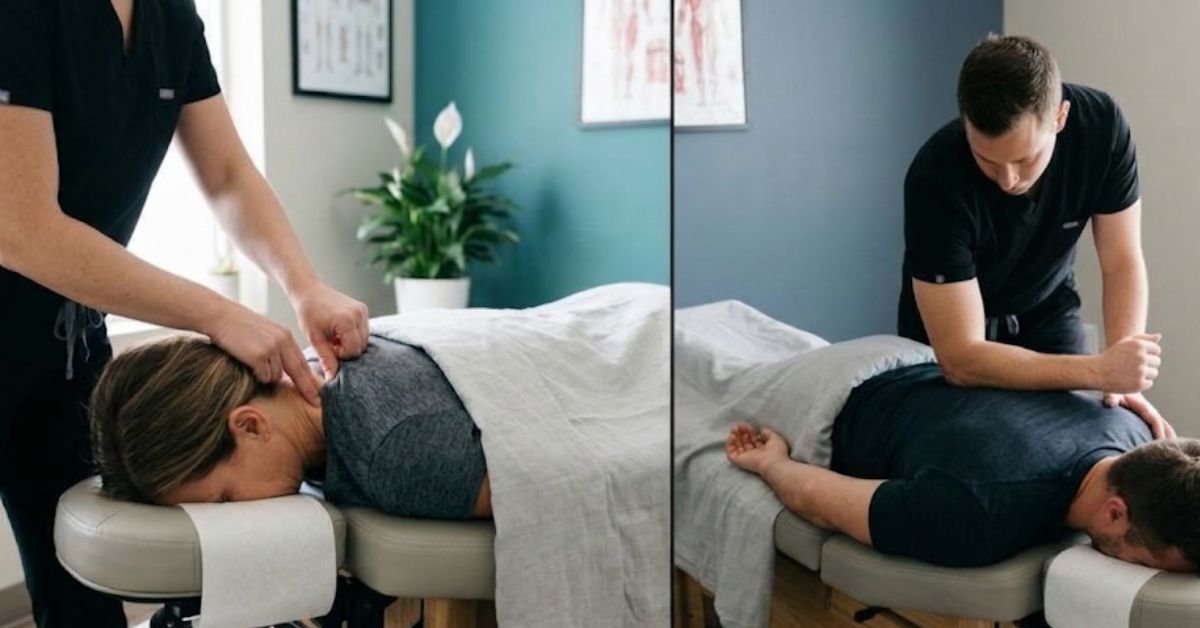
When your shoulders feel knotted, your upper back is tight, or one tender spot seems to send discomfort into another area, two massage terms often come up: trigger point massage and deep tissue massage. They can both be used in therapeutic care, but they do not mean exactly the same thing. The difference lies mainly in how the therapist identifies the problem and applies pressure.
Trigger point massage typically concentrates on specific sensitive spots in muscle that may reproduce familiar pain or referred discomfort. Deep tissue massage generally uses slower, firmer techniques across a broader region of muscle and surrounding soft tissue. Either approach may be used on its own or as part of a wider plan.
At Citrin Chiropractic Center in St. Louis, therapeutic massage options include deep tissue, trigger point, and myofascial techniques. Choosing the technique should begin with the patient’s condition, tissue sensitivity and goals—not the assumption that more pressure always produces better results.
What Is Trigger Point Massage?
A trigger point is commonly described as a particularly sensitive spot within a taut or tender area of muscle. Pressing it may produce localized discomfort and, in some cases, a familiar ache in a nearby or more distant region. For example, a tender area around the shoulder or upper back may reproduce discomfort elsewhere. Such patterns are one reason a therapist may examine surrounding muscles instead of focusing only on where the patient feels pain.
Trigger point massage uses targeted pressure, typically held for a short period and adjusted according to the patient’s tolerance. The purpose is to address localized muscular sensitivity and help the person move more comfortably. The exact biology of trigger points and the benefits of individual manual techniques are still subjects of research, so it is best not to promise that pressing a knot permanently “releases” a particular structure.
Citrin also describes focused trigger point care in its trigger point therapy service. This new article focuses specifically on how massage approaches compare; the clinic’s separate K-taping versus trigger point guide addresses a different comparison.
What Is Deep Tissue Massage?
Deep tissue massage is a style of massage using deliberate, often firmer strokes and pressure directed at tense muscles and connective tissue. Rather than concentrating primarily on one tender point, it may cover larger regions such as the upper back, shoulders, hips or legs.
That does not mean it always needs to be painful or should reach a supposed “deep layer” at any cost. A skilled therapist changes the pressure, pace and location based on tissue response and the patient’s comfort. Deep pressure can be inappropriate soon after an acute injury or for someone with certain medical conditions.
If you are comparing the clinical purpose of massage with its technique, read Citrin’s medical massage vs deep tissue massage guide. Here, the question is narrower: targeted trigger point pressure versus broader deep tissue work.
The easiest distinction: Trigger point massage is usually more localized and symptom-guided; deep tissue massage generally works through broader areas of muscular tension. A treatment session can include elements of both.
Trigger Point Massage vs Deep Tissue Massage: Side-by-Side
| Feature | Trigger Point Massage | Deep Tissue Massage |
|---|---|---|
| Primary focus | Specific tender points and associated symptoms | Broader regions of muscular tightness |
| Pressure pattern | Focused, sustained or repeated pressure | Slow strokes and sustained firm work across tissues |
| Area treated | Often a relatively small target area | Often a larger muscle group or region |
| Common goal | Reduce localized tenderness and improve comfort | Address diffuse muscular tension and stiffness |
| Intensity | Varies with point sensitivity and patient tolerance | Can be firmer, but should remain tolerable |
| Can they be combined? | Yes | Yes |
How Do You Know Which Massage Might Fit Your Symptoms?
The therapist considers the history, examination findings and symptom pattern. Some examples:
- One specific tender point reproduces familiar aching: focused trigger point work may be considered.
- Broad tension through the upper back or hips: deep tissue or another general soft-tissue approach may be a better fit.
- Several tender points plus widespread muscle tightness: the therapist may combine methods or use lighter work first.
- Numbness, weakness or radiating nerve symptoms: get an appropriate clinical evaluation rather than assuming the problem is a muscle knot.
- New pain after trauma: serious injury needs to be ruled out before firm massage.
These are examples, not self-diagnosis rules. A patient may have muscle tenderness along with a joint, disc or nerve problem, and the treatment plan should reflect that distinction.
Which Approach Is Better for Neck and Shoulder Tension?
Neck and shoulder discomfort may be related to desk work, physical activity, stress-related muscle guarding, sleep position, or an underlying joint or neurological condition. When a focused tender spot is prominent, trigger point techniques may be considered; when a broad region feels tense, deeper massage methods may be suitable.
Neither technique should be assumed to cure chronic neck pain on its own. Some patients benefit from a combination of manual care, movement, and ergonomics. Citrin’s neck pain at work guide discusses the activity and posture factors that may coexist with muscular discomfort.
Is Trigger Point Massage Supposed to Hurt?
Focused pressure on a tender point can be uncomfortable, and a therapist may reproduce some familiar aching. That is not a reason to push through sharp or unbearable pain. The goal is a tolerable response, not proving the treatment works by making the patient hurt.
Tell the therapist if pressure produces sharp pain, tingling, numbness, dizziness, unusual symptoms or an increasing sense of irritation. The technique or intensity should be adjusted, and some symptoms may call for further evaluation instead of continuing massage.
More pressure is not always better
Choosing the deepest or most uncomfortable massage is not a reliable way to get better results. Strong pressure can leave unnecessary soreness or be unsuitable for patients with certain injuries, medications, or medical conditions.
Can Trigger Point and Deep Tissue Massage Be Combined?
Yes. A therapist may use broader techniques to address general stiffness and then apply focused pressure to particularly tender areas—or use lighter techniques where deeper pressure is not tolerated. The sequence is not fixed, and there is no universally superior order.
Other methods may also be relevant. Citrin’s myofascial release therapy guide explains another targeted soft-tissue approach used for some movement and muscle-tension complaints.
What About Massage After a Car Accident?
After a collision, patients may have muscle guarding and soreness, but they can also have injuries that should not be massaged aggressively. Early screening is particularly important when there is severe pain, swelling, possible fracture, new nerve symptoms, concussion concerns or unexplained bruising.
Once the injury is properly evaluated, a therapist may choose gentle soft-tissue techniques, targeted work, or defer massage depending on the stage of recovery. Citrin’s auto accident care program includes examination and coordination of appropriate musculoskeletal treatment. Massage is not a substitute for emergency care or medical assessment.
When Should You Avoid or Modify Firm Massage?
Tell the therapist about blood-thinning medication, recent surgery, fragile skin, unexplained bruising, bleeding conditions, serious medical illness, or a new injury. Deep or vigorous massage may require precautions or may not be suitable in some situations. Avoid direct massage over an open wound, suspected fracture or active infection.
Massage can help some people with pain or tension, but it should not be used to diagnose the source of weakness, loss of sensation, severe headache or other potentially serious symptoms. Those findings need medical evaluation.
How Does Massage Work With Chiropractic Adjustments?
Soft-tissue discomfort and joint restriction can coexist. Depending on the examination, a care plan may use massage to address muscular tightness and chiropractic care to address an appropriate musculoskeletal problem. Rehabilitation and activity changes may also be important.
These therapies are not interchangeable, and not every patient needs both. For more about coordinated care rather than comparing massage pressure techniques, see Citrin’s chiropractic massage and adjustments guide.
What to Expect at Citrin Chiropractic Center
Citrin Chiropractic offers therapeutic massage within a broader chiropractic clinic in St. Louis. Licensed massage therapists may use deep tissue, trigger point, myofascial, and other techniques when they are appropriate to the patient’s condition and goals.
When scheduling, describe the main area of discomfort, whether the pain is localized or widespread, any recent injury, relevant medical conditions, and what pressure usually feels comfortable. This helps the team determine the right starting point rather than selecting a massage solely by its name.
Serving St. Louis and Nearby Communities
Citrin Chiropractic Center is located at 10035 Page Avenue, St. Louis, MO 63132. The practice serves patients from Overland, Maryland Heights, Creve Coeur, Clayton, University City, Hazelwood, Florissant, Ferguson, and nearby communities. Bilingual English and Spanish care is available.
Frequently Asked Questions
Is trigger point massage the same as deep tissue massage?
No. Trigger point massage focuses on specific tender points, while deep tissue massage generally uses firmer techniques across a broader muscle area. A therapist may combine them when appropriate.
Which one is better for muscle knots?
The better approach depends on the location, sensitivity and underlying cause of the discomfort. Focused trigger point techniques may be considered for localized tenderness; broader work may be useful when muscular tension is widespread.
Can trigger point massage cause soreness?
Mild temporary soreness can occur. Sharp, persistent or worsening pain is a reason to stop and contact the provider rather than assuming the treatment is working.
Does deep tissue massage need to be painful?
No. Pressure should be adjusted to tolerance and the condition being treated. More pain does not automatically mean a better result.
Can I have both techniques in one appointment?
Sometimes. Your therapist may combine targeted and broad techniques depending on examination findings, the treatment goal and comfort level.
Can massage treat a pinched nerve?
Massage may help accompanying muscle tension, but it does not reliably correct a compressed nerve. Persistent numbness, weakness or radiating pain warrants appropriate evaluation.
Does Citrin offer both trigger point and deep tissue massage?
Yes. Citrin lists both among the therapeutic massage techniques available through its St. Louis practice. Call to discuss scheduling and whether a particular technique is suitable for you.